18 Stacked Bob Hairstyles for Fine Hair With Instant Crown Volume
The stacked bob works on fine hair because the graduated layering at the back does something no styling product can replicate: it builds actual structural volume at the crown and nape where fine hair goes flat first. The whole point of the technique is the short-to-longer graduation running from the nape up through the back, which creates a rounded silhouette that reads as density even before any styling. What fine-hair wearers get wrong is asking for the stacking to run too far up the head or too aggressively through the sides. That thins the shape rather than lifting it. Every variation below plays with the stacked principle differently, whether through cut shape, bangs, or strategic color.
Jump to:
- Classic Stacked Bob
- Short Stacked Bob
- A-Line Stacked Bob
- Inverted Stacked Bob
- Asymmetrical Stacked Bob
- Rounded Stacked Bob
- Concave Stacked Bob
- Blunt Stacked Bob
- Choppy Stacked Bob
- Feathered Stacked Bob
- Pixie Stacked Bob
- Long Stacked Bob
- Stacked Bob with Curtain Bangs
- Stacked Bob with Blunt Bangs
- Stacked Bob with Wispy Bangs
- Stacked Bob with Side-Swept Bangs
- Stacked Bob with Balayage
- Stacked Bob with Money Piece
Classic Stacked Bob
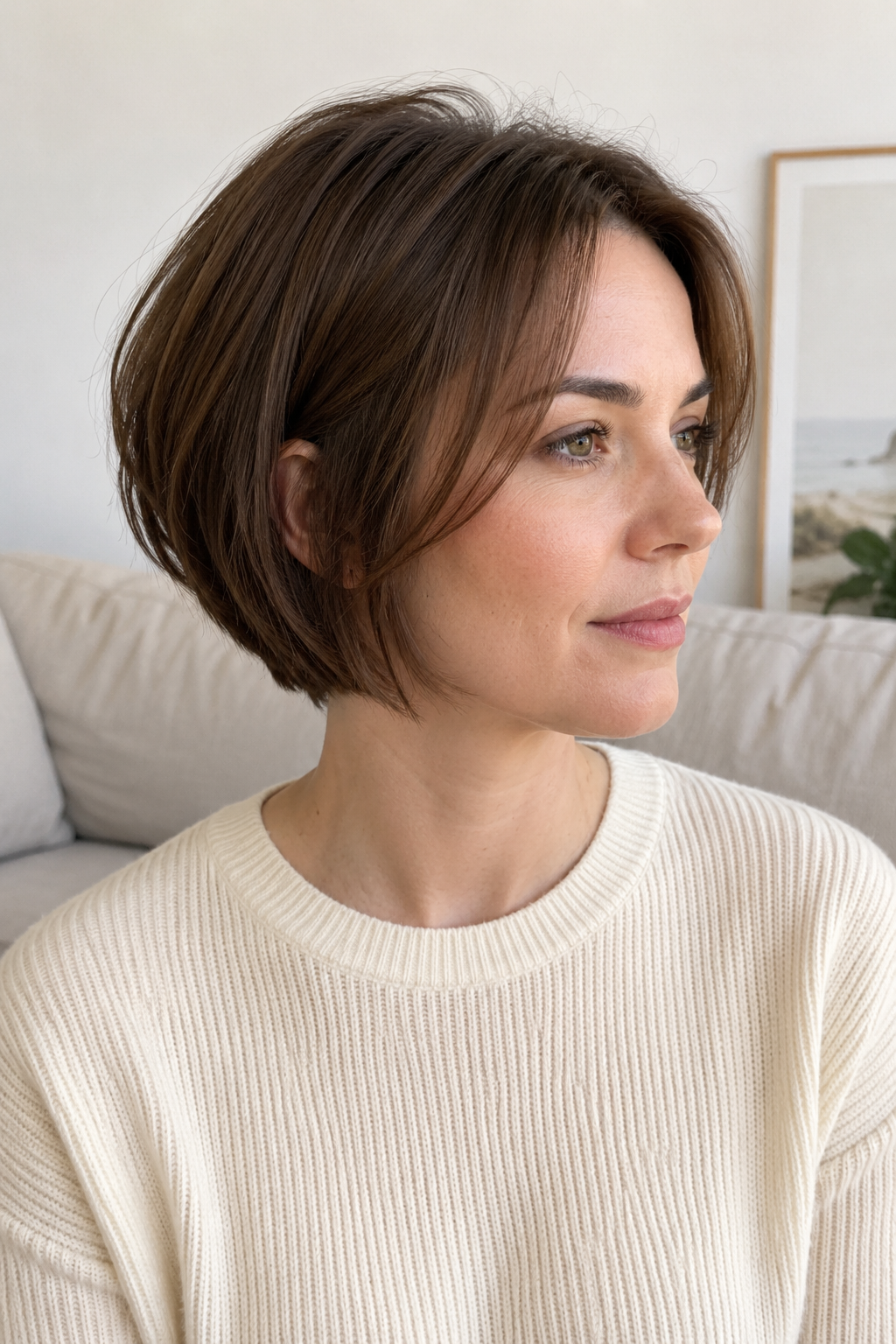
Chin-length at the front with short graduated stacking through the back that builds a rounded silhouette at the nape. This is the fine-hair benchmark version because the stacking handles the volume concern while the perimeter stays clean and defined. Ask for the shortest stacked layer to sit right at the occipital bone, gradually lengthening down to the chin at the front. A round brush during blow-drying locks in the crown lift.
Short Stacked Bob
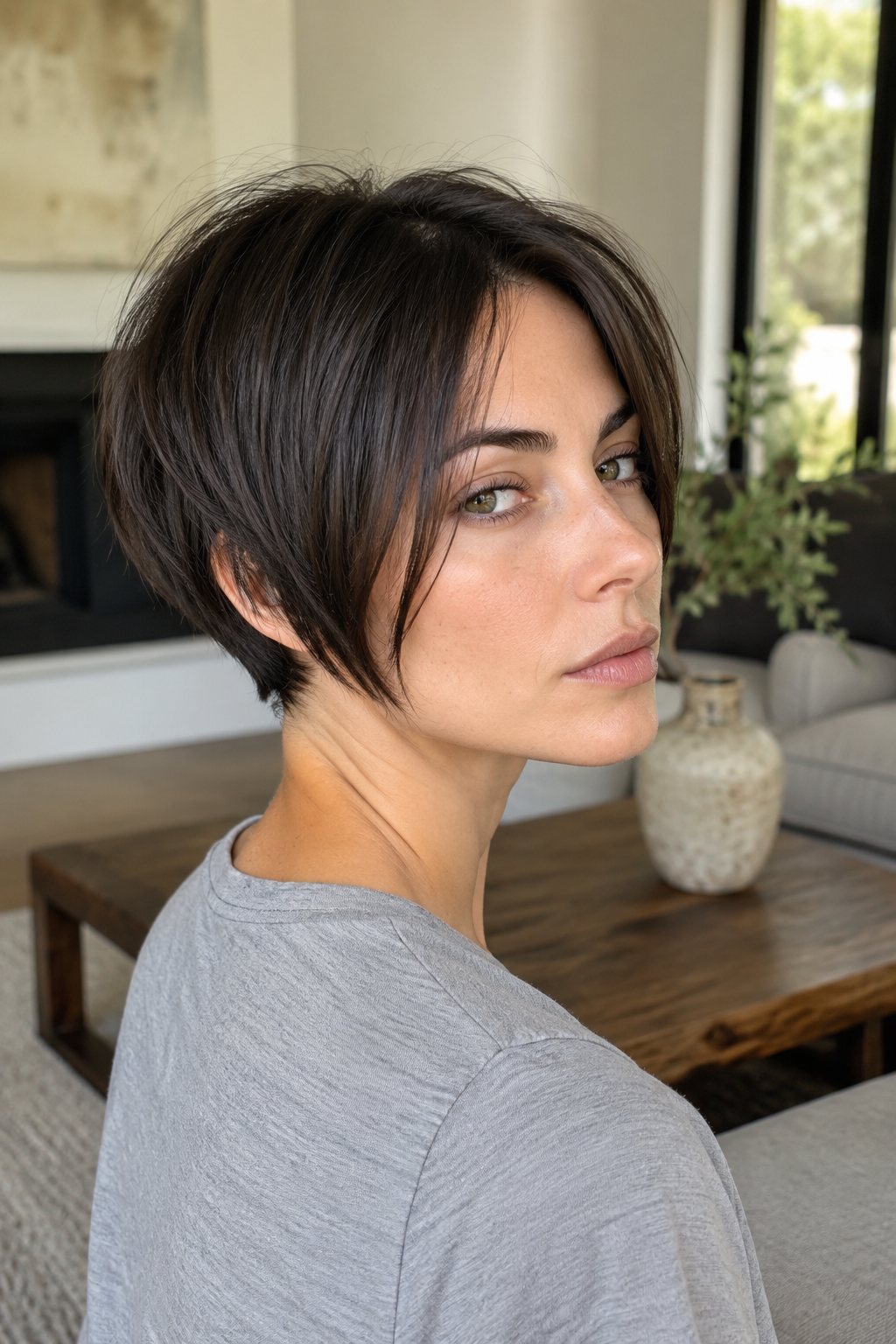
Cut even shorter than the classic, this variation sits above the jawline with dramatic stacking at the back. The ultra-short length concentrates every strand into the smallest possible perimeter, delivering the strongest density illusion for fine hair. This is a high-commitment shape that requires precision cutting, so it demands a stylist confident with short work. Style with a small amount of wax worked through the top for the piecey finish.
A-Line Stacked Bob
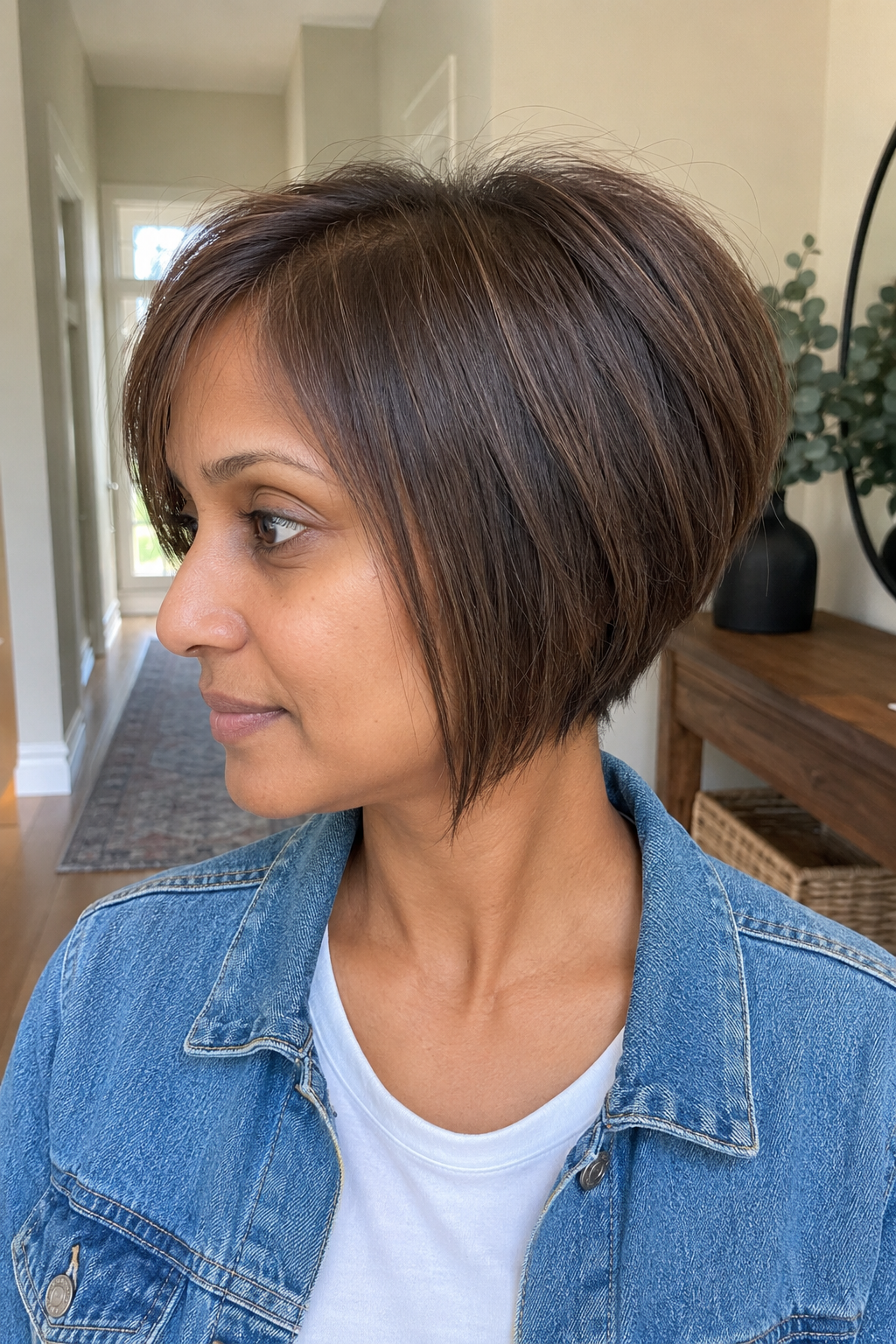
The A-line silhouette gradually lengthens from a stacked back toward a longer front that hits closer to the jaw or collarbone. On fine hair, this shape draws the eye down along the face while the stacked back handles the crown volume. Keep the angle subtle rather than dramatic, since steep A-lines can look dated. A round brush working the stacked section upward creates the signature lift.
Inverted Stacked Bob
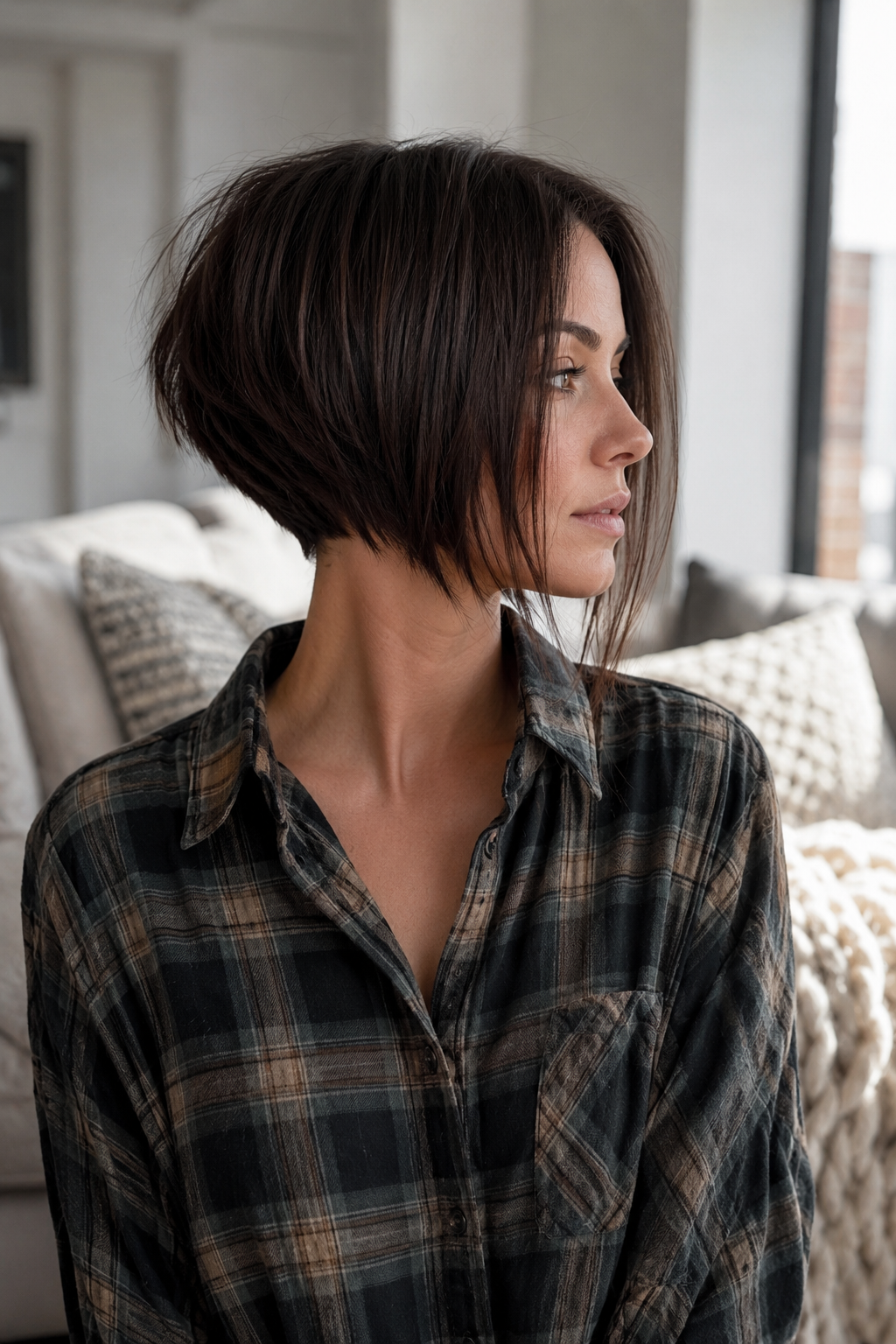
The inverted version takes the A-line further with steeper graduation and more aggressive stacking at the back. This is one of the sharpest fine hair options because the stacking creates serious volume where flatness typically shows first, while the front remains dramatically long. Blow-dry from underneath with a round brush to maximize the stacked lift. The front pieces frame the face and elongate the neck.
Asymmetrical Stacked Bob
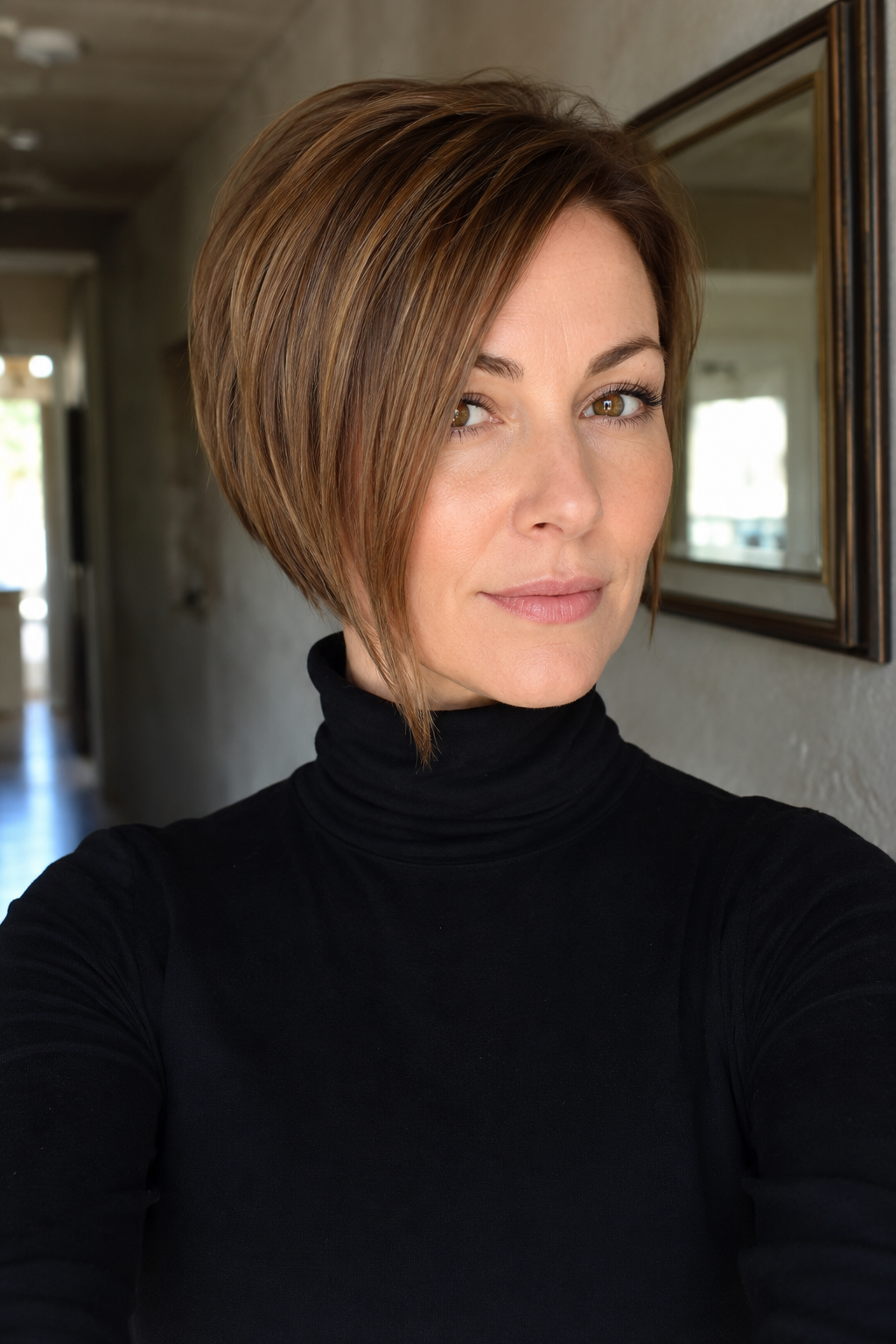
One side longer than the other by an inch or more, combined with stacking through the back, creates modern edge and adds visual interest that distracts from any flatness. On fine hair, the asymmetry draws the eye to the intentional structure rather than to hair density. Style with a light cream to hold the shape sharp without weighing the strands down. This suits anyone wanting a statement cut.
Rounded Stacked Bob
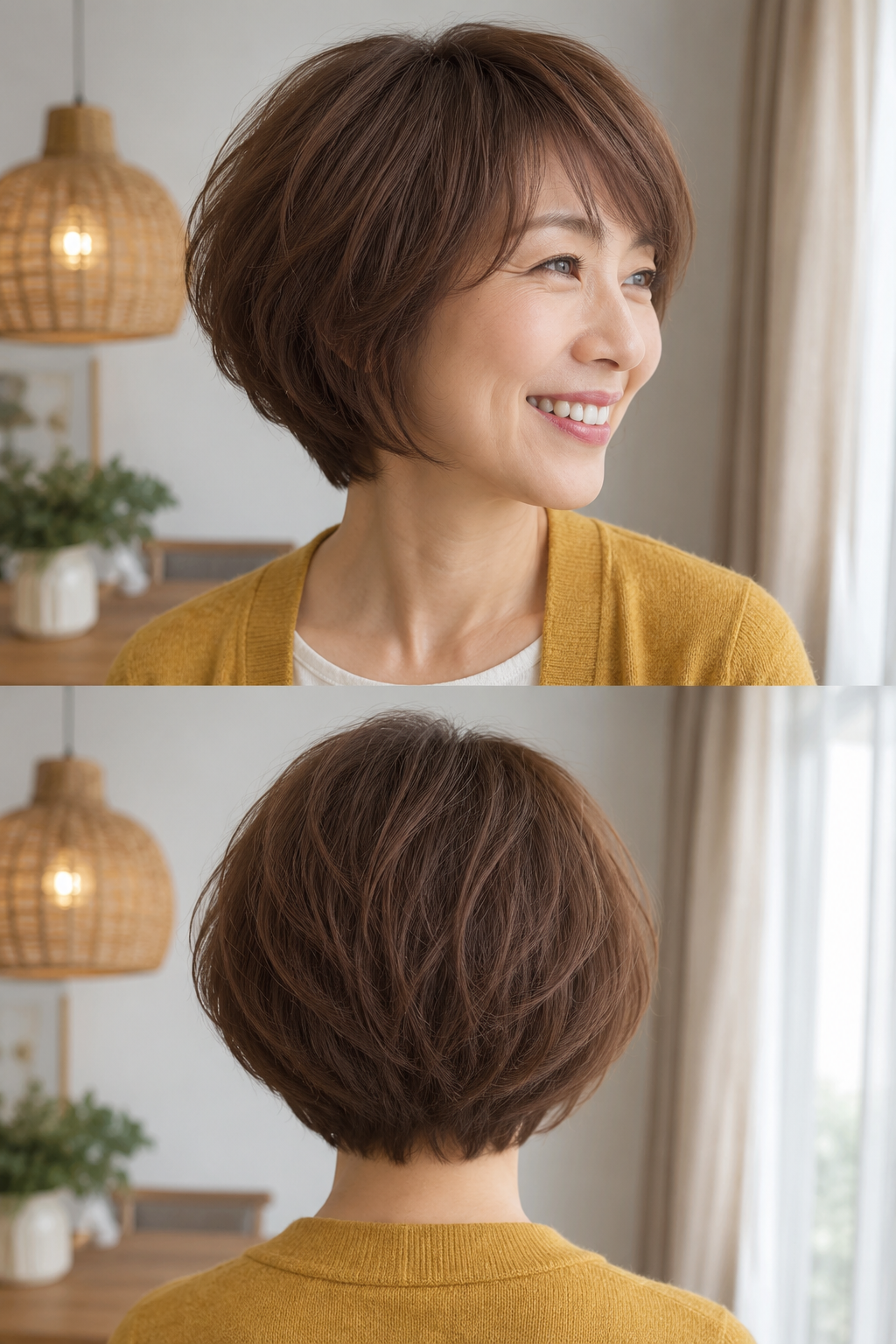
A softly curved perimeter with rounded stacking through the back gives a fluffy, cloud-like silhouette that fine hair benefits from because the shape itself reads voluminous. The rounded finish concentrates weight into a soft curve rather than a sharp line. Style with a large curling iron worked away from the face, then gently break the shape with fingers. Skip smoothing serums that would flatten the crown.
Concave Stacked Bob

The concave stacked bob features dramatic angular graduation, with the back cut extremely short and the front dropping steeply toward the chin or jaw. This is the most architectural of the stacked variations. On fine hair, the concave shape delivers strong crown volume while the elongated front creates a striking, sculpted look. Requires professional maintenance every four to six weeks to keep the angles crisp.
Blunt Stacked Bob
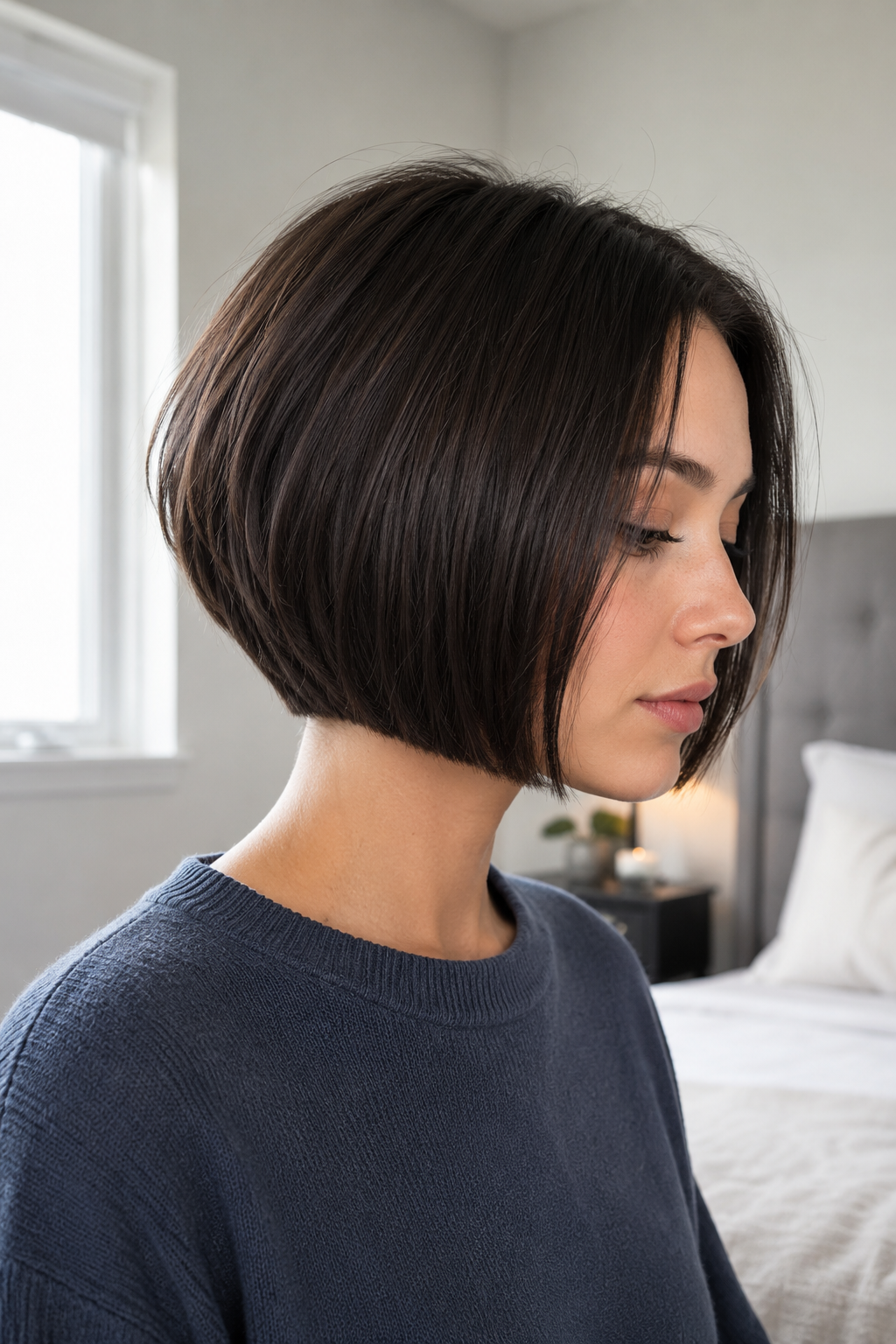
Combines a sharp blunt perimeter with subtle stacking through the back for a look that feels precise rather than textured. The blunt line concentrates weight at the bottom while the stacking creates rounded volume above. On fine hair, this is one of the cleanest, most polished options because both elements contribute to the density illusion. A flat iron finishes the blunt line, and a smoothing serum keeps the shape sleek.
Choppy Stacked Bob
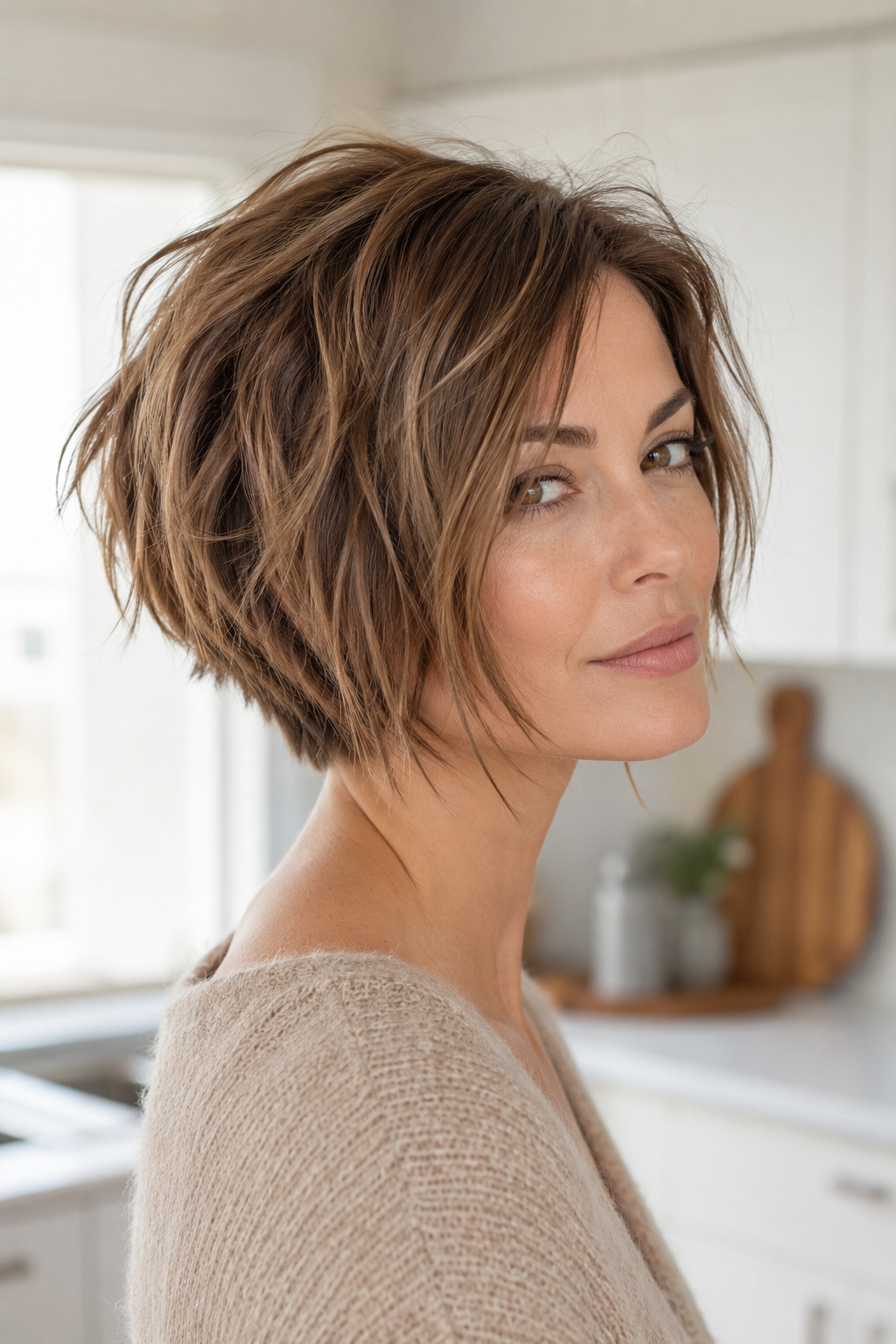
Point-cut piecey texture worked through a stacked bob adds movement and edge without sacrificing the crown volume the stacking creates. The choppy interior keeps the whole shape from reading too rounded or polished. On fine hair, ask for the choppy texturing concentrated at the top third only, letting the stacked back stay clean. Style with texture spray from the roots and a wax through the top.
Feathered Stacked Bob
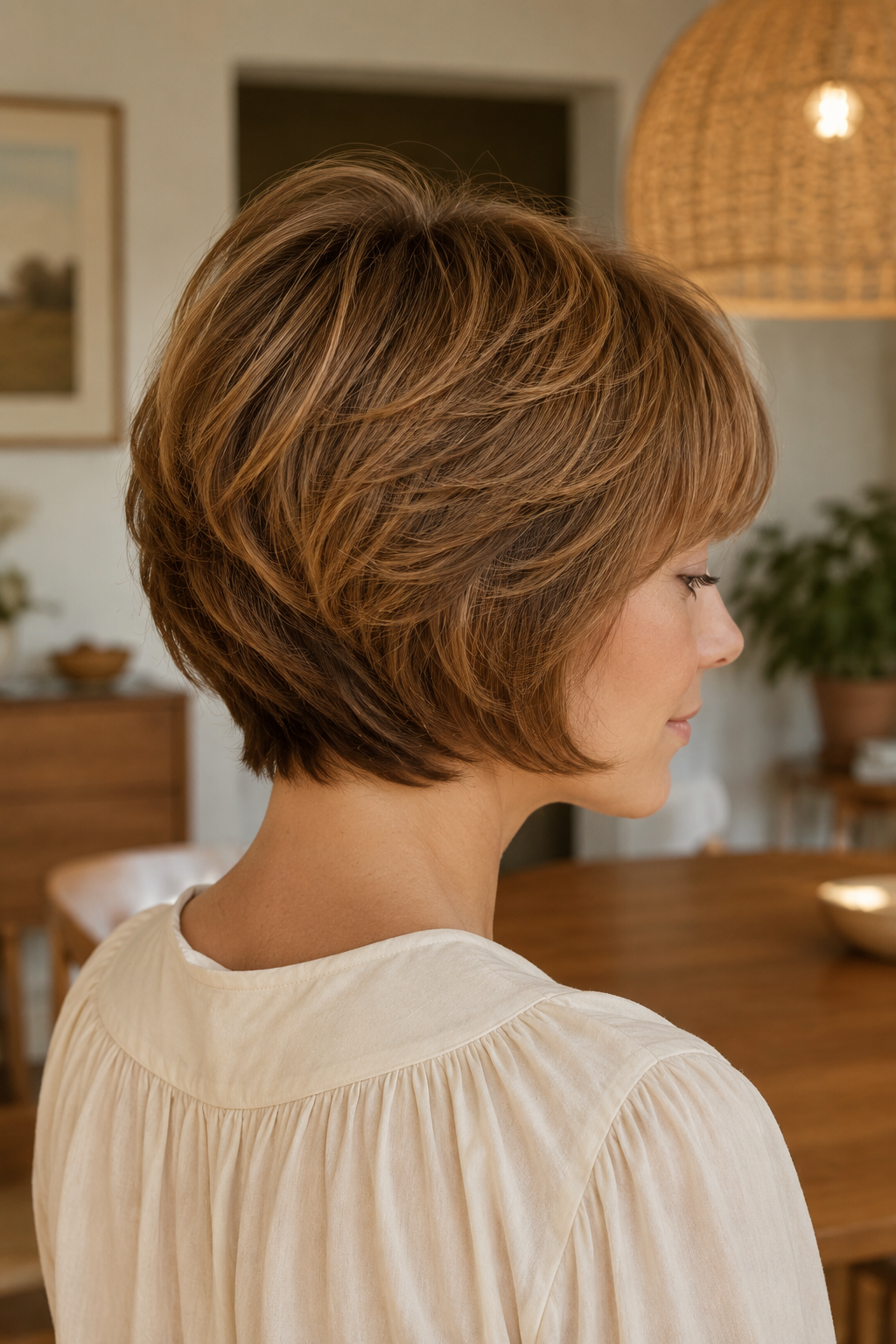
Soft feathered layers through the stacked back and top bring 70s-inspired airiness into the shape. The feathering gives movement that fine hair typically lacks while the stacking anchors the crown volume. Keep the feathering subtle, since heavy feathering can thin the ends. A large paddle brush during blow-drying sets the feathered shape, and a light-hold hairspray keeps everything airborne through the day.
Pixie Stacked Bob
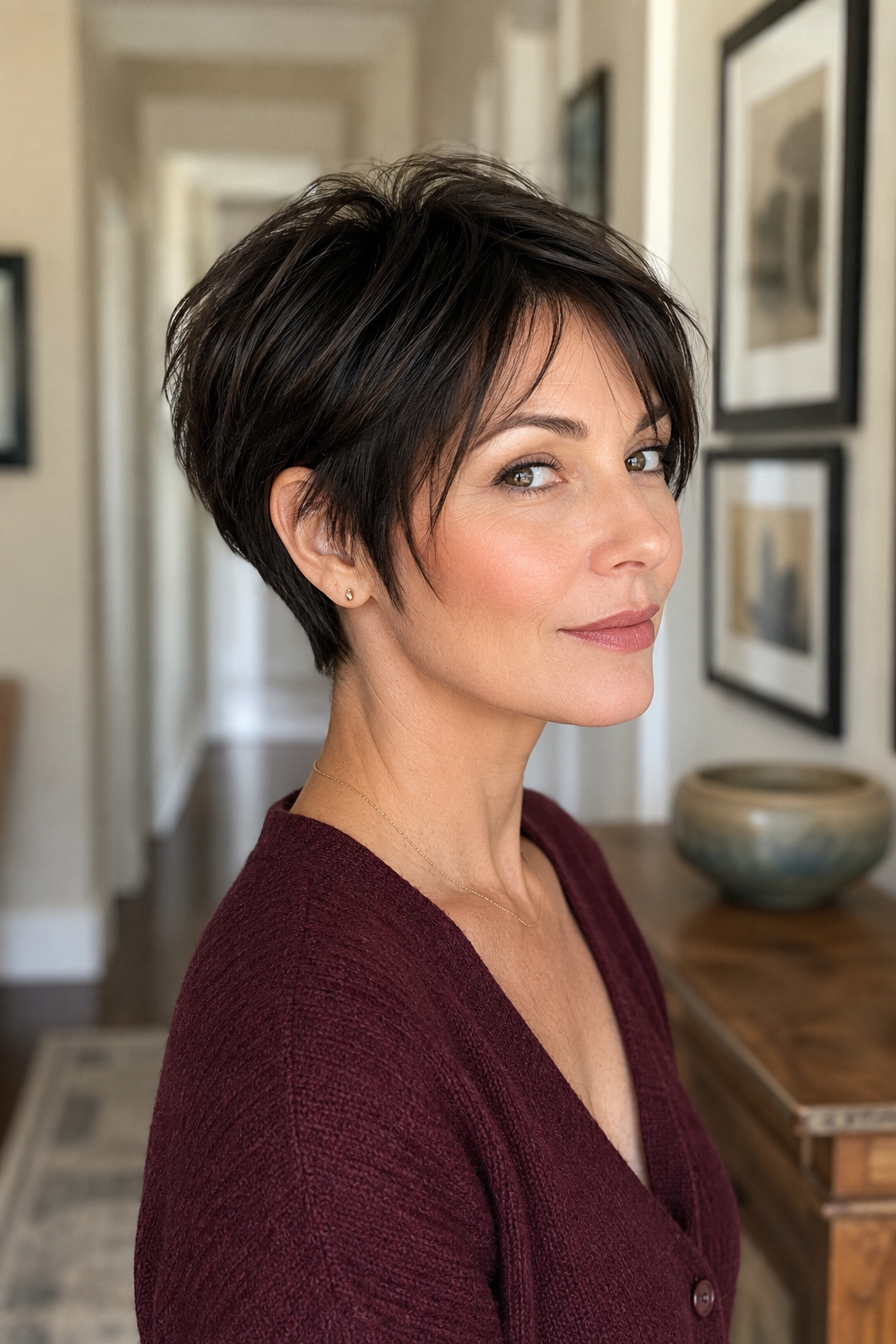
A hybrid of the pixie cut and the stacked bob, this variation sits shorter overall with dramatic pixie-style stacking at the nape and longer piecey pieces on top and around the front. Fine hair benefits from the shorter length because there's less strand weight fighting the shape. Style with a wax pomade for the piecey top and a flat iron for the front pieces framing the face.
Long Stacked Bob
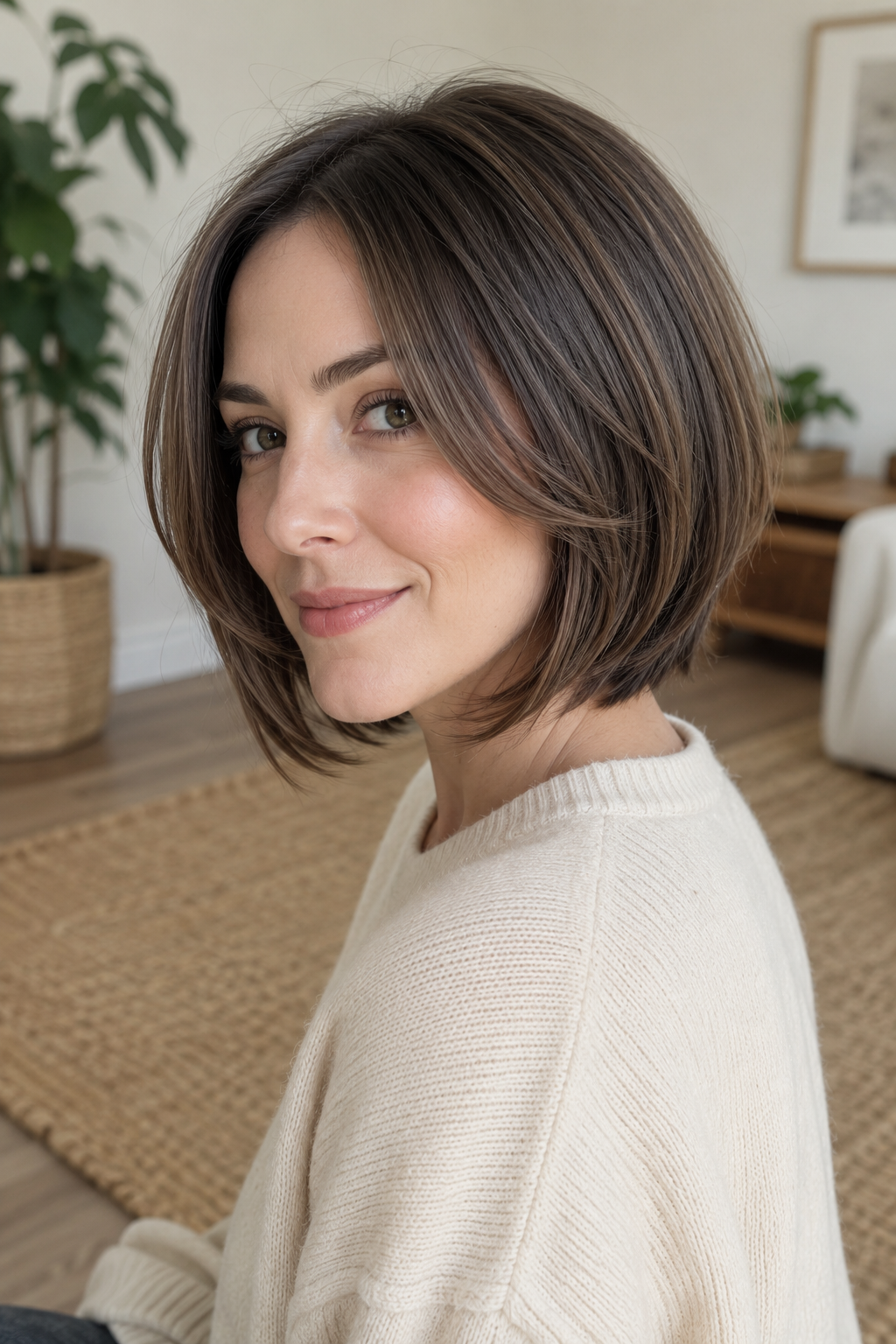
Sits just above the shoulders with softer graduated stacking through the back. This is the closest a stacked bob comes to lob territory without crossing over. On fine hair, the length gives more styling flexibility while the stacking still delivers crown volume. Style with a round brush during blow-drying, curling the front pieces slightly inward toward the face for a soft, finished look at the perimeter.
Stacked Bob with Curtain Bangs

Curtain fringe sweeping softly past the cheekbones on both sides pairs beautifully with a stacked bob because the bangs add fullness at the front while the stacking handles the back. On fine hair, this combination handles both density concerns at once. Grow the curtain to just past the cheekbones for the modern proportion. A small amount of mousse at the bang roots holds the sweeping curve.
Stacked Bob with Blunt Bangs
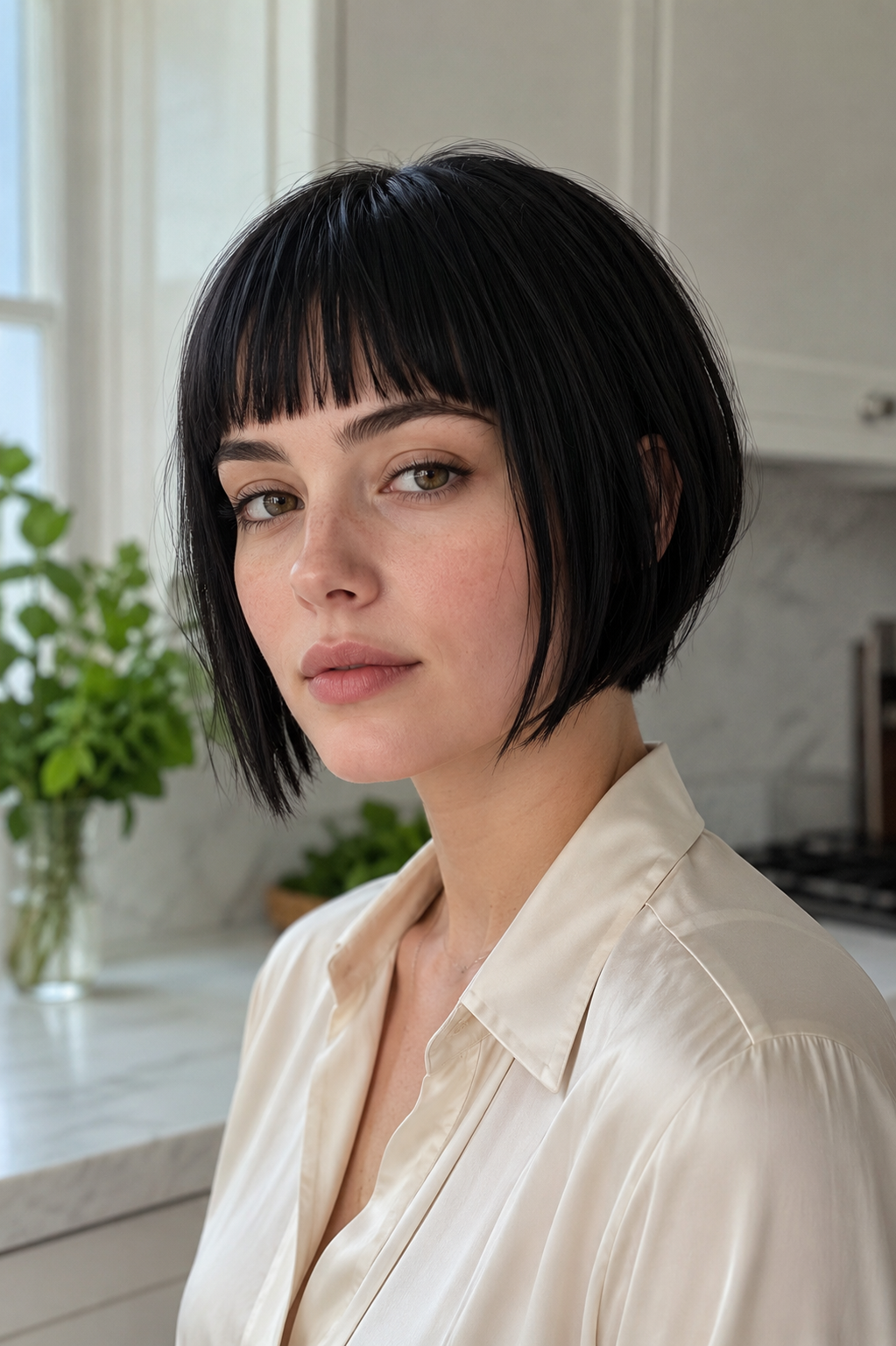
A heavy straight-across fringe combined with a stacked bob creates strong horizontal structure at the forehead while the stacking builds vertical structure at the crown. The density of the blunt bangs compensates for any sparseness through the interior. Blunt bangs need weekly trims to stay sharp. A good root spray or dry shampoo helps hide any scalp visibility at the part.
Stacked Bob with Wispy Bangs
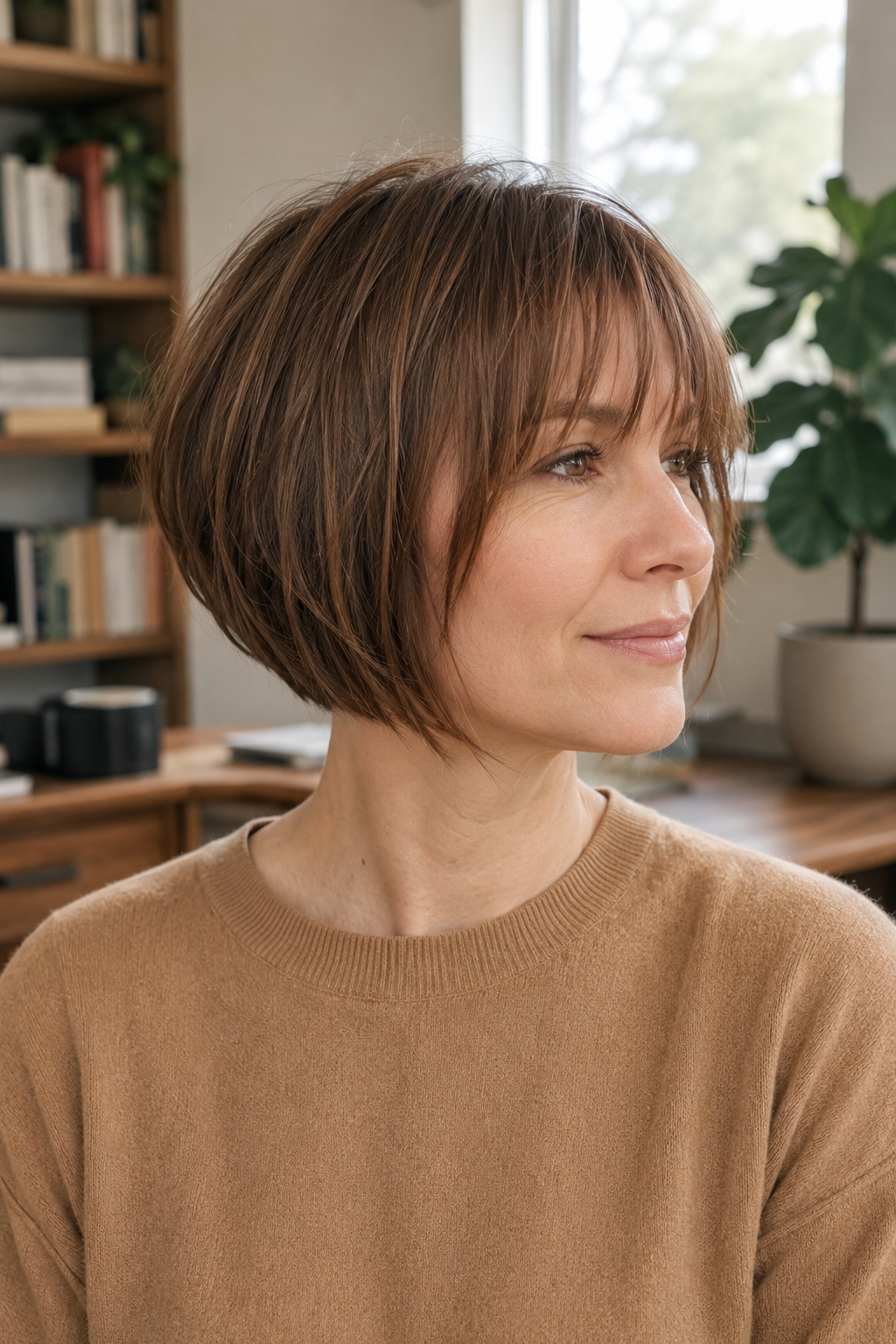
Wispy longer bangs skimming just below the brows soften the face while the stacked back handles the volume. On fine hair, wispy bangs contribute front-of-face weight without the maintenance of a blunt fringe. Keep them longer than you think they should be, since fine wispy bangs cut too short tend to stick out. A drop of styling oil keeps them lying smoothly against the forehead.
Stacked Bob with Side-Swept Bangs
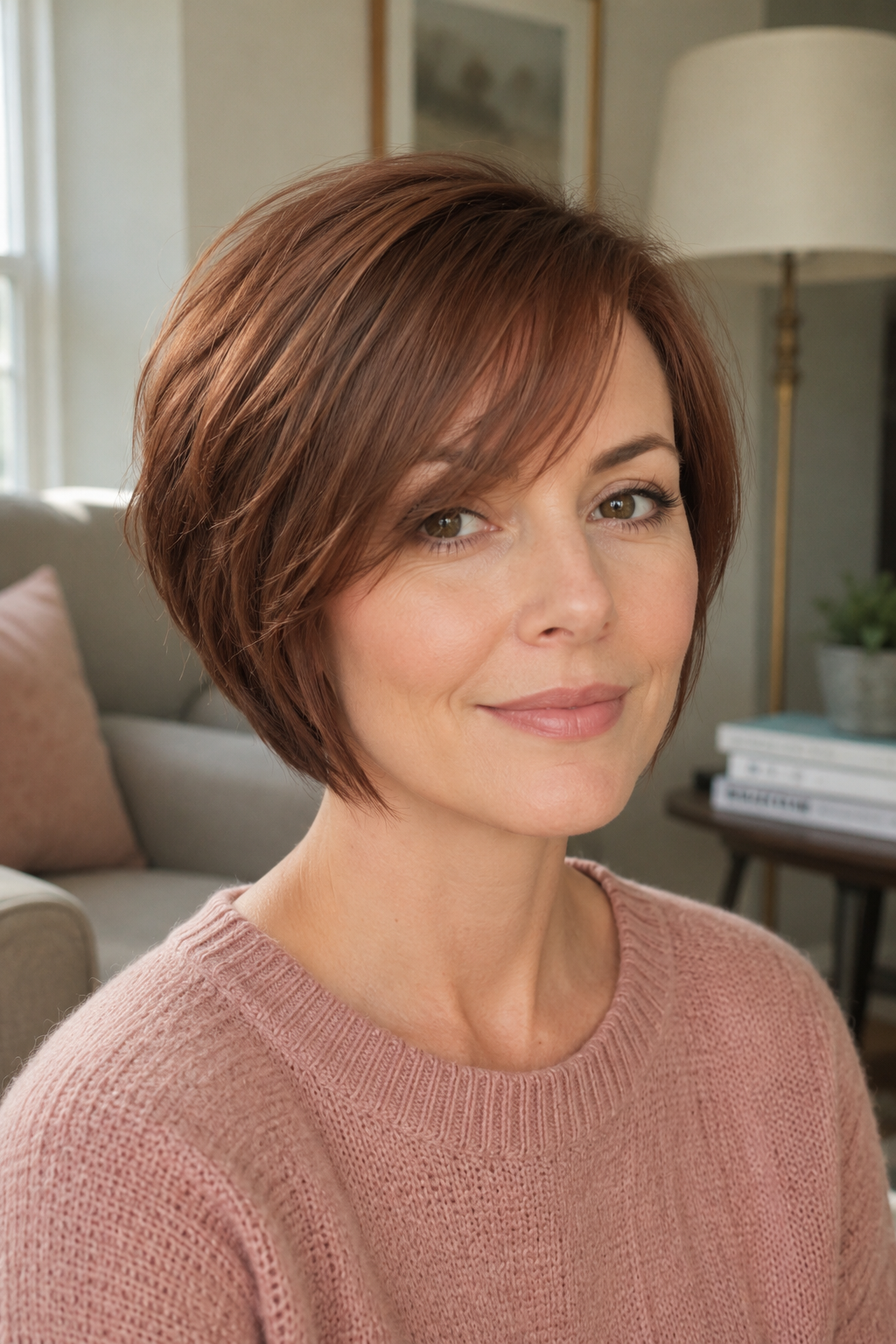
Longer bangs sweeping dramatically across the forehead paired with a stacked bob create asymmetry that adds dimension. On fine hair, side-swept bangs contribute visible weight to one side of the crown, which lifts the whole shape optically. Grow the bangs long enough to blend into the length behind them. A light styling cream holds the sweep without stiffness or weight.
Stacked Bob with Balayage
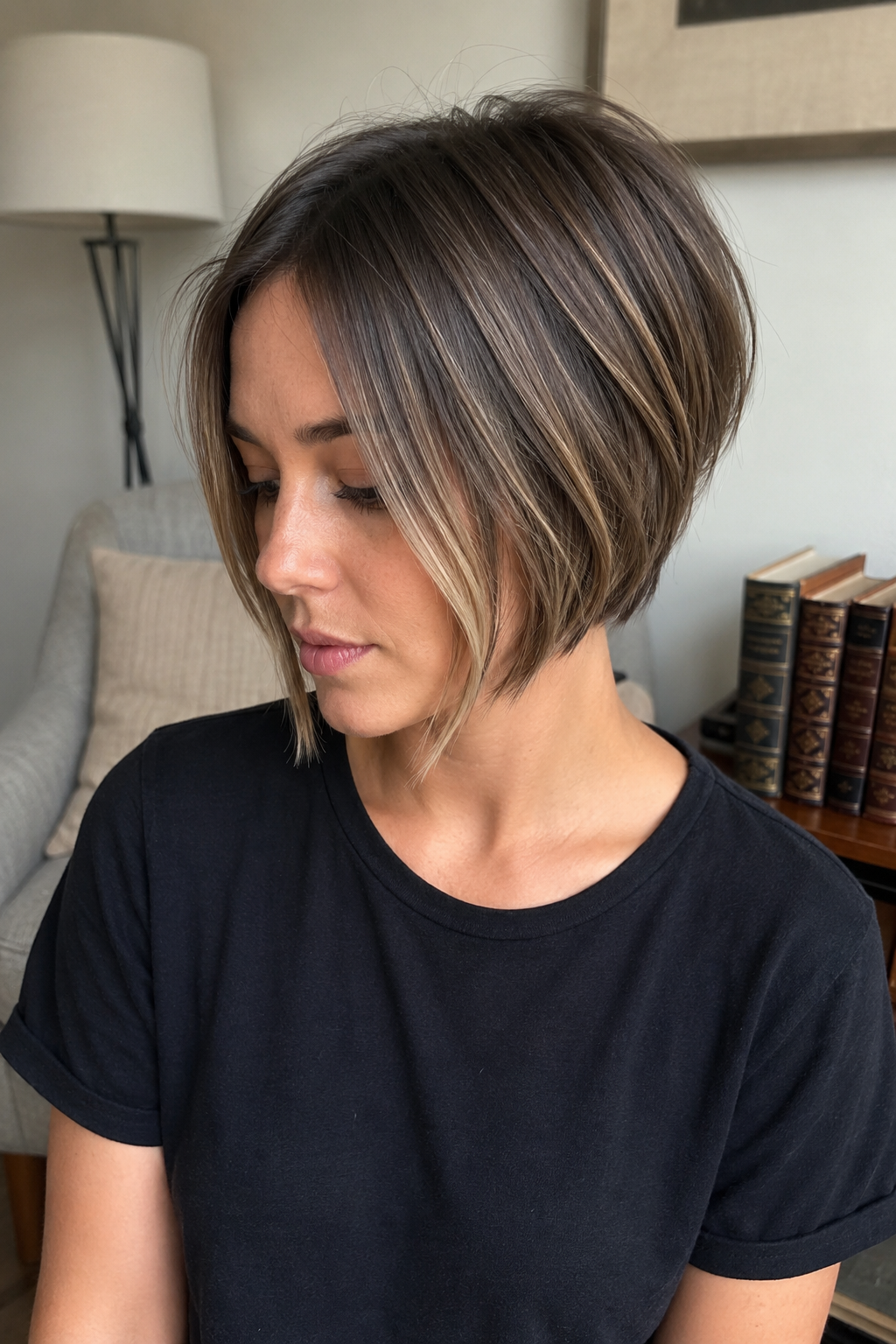
Hand-painted balayage highlights running through the mid-lengths and stacked back create dimension that fine hair rarely has on its own. The lightness catches light and reads as more density. Cool ash tones work best for cool bases, honey or caramel for warm bases. Balayage grows out gracefully, which suits anyone stretching salon visits. Regular toning refreshes the color between cuts.
Stacked Bob with Money Piece
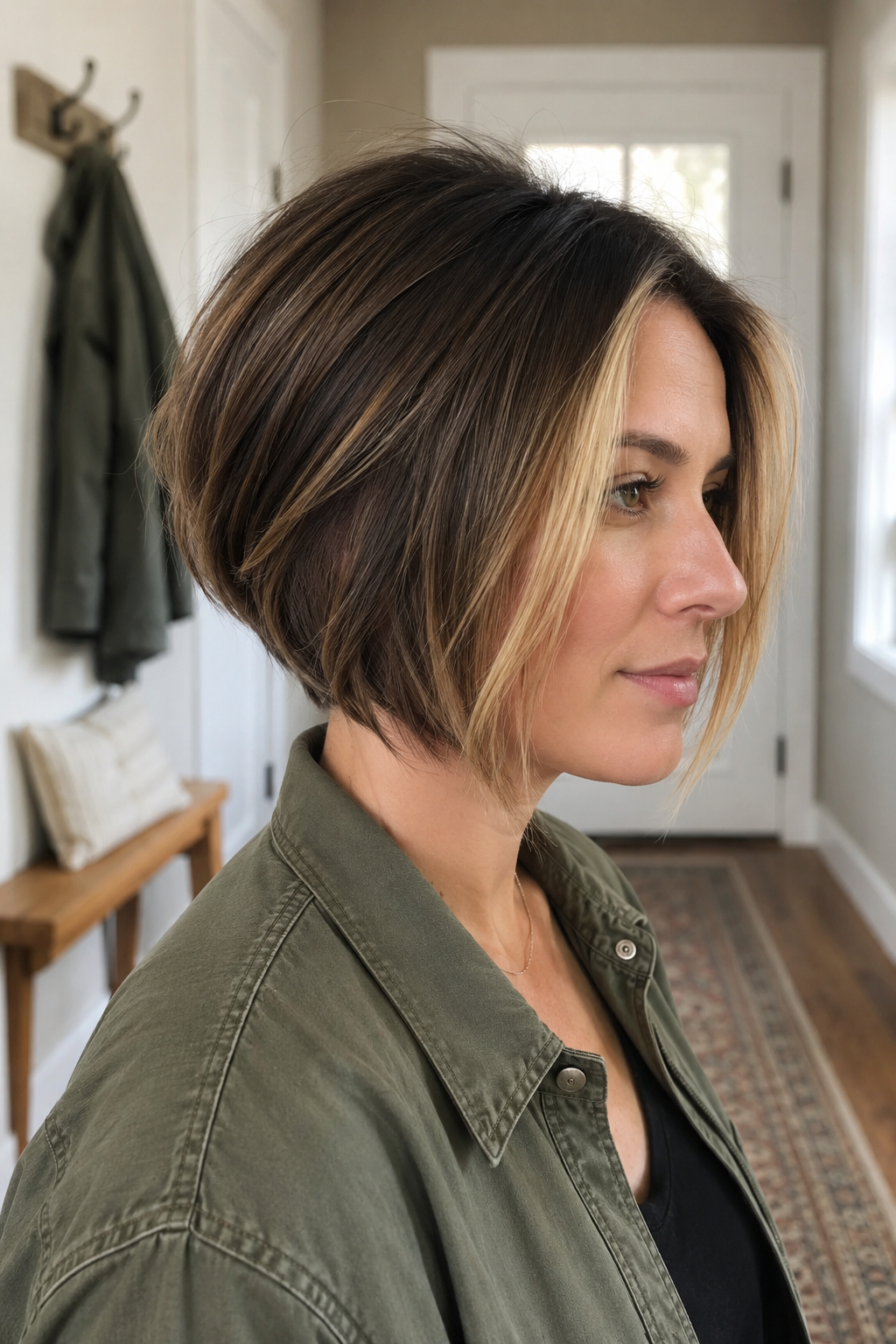
Two bright ribbons of lighter color framing the face against a darker stacked base creates depth that pulls the eye toward the front of the cut. On fine hair, this dimensional trick adds visual fullness at the perimeter where the stacking might otherwise pull attention entirely to the back. Keep the money piece cool-toned or warm-toned to match the base for a dimensional effect rather than a striped one.
Comments
No Comments